CBAM-OK for EU importers
Prepare review-ready CBAM data faster.
AI-assisted HS/CN classification, emissions review, and annual CBAM working packages for EU importers.
Live preview
One goods line in, CBAM structure out.
Product description
Extruded aluminium hollow profile, 128 kg, origin Turkey
- CN
- 7604 10 10
- Scope
- Aluminium
- Origin
- TR
- AI
- 94%
<goodsItem>
  <cnCode>76041010</cnCode>
  <origin>TR</origin>
  <directSEE>
    1.6400 tCO2e/t
  </directSEE>
  <indirectSEE>
    14.1200 tCO2e/t
  </indirectSEE>
</goodsItem>AI suggestions require importer review; CBAM-OK does not provide customs or legal advice and does not file declarations.
Workflow
From supplier line item to annual working package
CBAM-OK guides classification, default values, review, and structured annual exports without turning a simple import workflow into a consulting project.
Describe the product
One sentence is enough for the first classification suggestion.
Check CBAM scope
Annex I match, CN code, and rationale stay side by side.
Export the annual package
Reviewed records are bundled as CSV and JSON for your annual declaration work.
01
AI-assisted HS/CN classifier
Describe the product in one sentence — our classifier returns the 8-digit CN code, CBAM Annex I scope check, confidence score, and rationale.
02
Annual CBAM working package
Reviewed in-scope records export as structured CSV and JSON for annual registry entry or advisor review, including clearly marked EU default values.
Audit trail
Built for deadlines, auditability, and repetition.
Every imported item stays traceable: CN code, origin, emission source, default value, and review status live in one structured flow.
Registry handoff
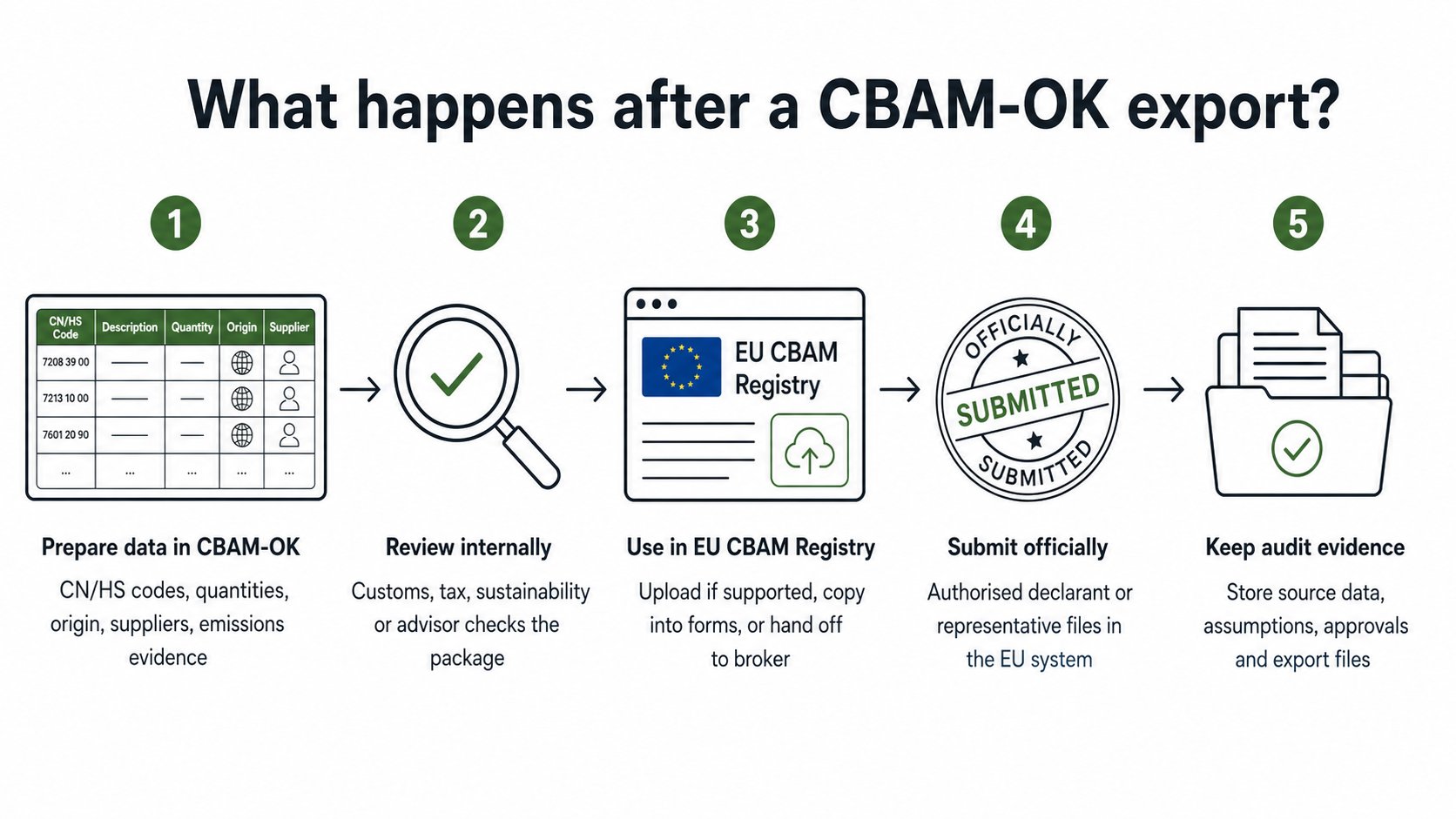
What happens after a CBAM-OK export?
Use the export as a structured source for annual registry entry or broker/advisor review. It is not a direct registry filing file; official review and submission remain the importer’s responsibility.
FAQ
FAQ
Short answers for import teams deciding whether CBAM applies and what data they need next.